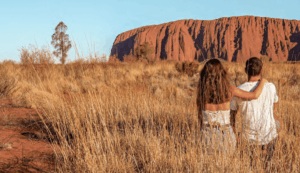
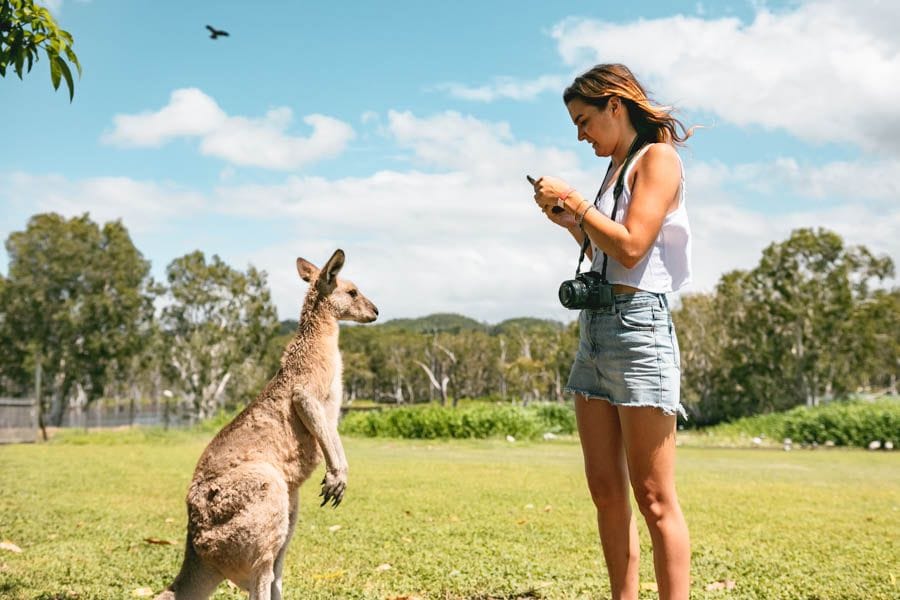
One of the most extraordinary privileges of a working holiday in Australia is sharing the landscape with Australian wildlife that backpackers from every corner of the world travel specifically to see. The dream is not just about vibrant cities or stunning coastlines — it is about connecting with the raw, untamed heart of the continent. Among its most iconic residents are the kangaroo, the koala, and the emu. When you head out to regional Australia to complete your 88 days of specified work, you are placing yourself directly in the middle of these habitats. The wildlife is not in a zoo; it is grazing between the rows of your citrus orchard at dawn, nesting in the gum trees above your working hostel, and striding across the paddock next to your tractor. This guide covers exactly how to spot, observe, and photograph these animals safely and responsibly — and how to make the most of every encounter without disrupting the ecosystems you are working inside.
The Reality of Australian Wildlife Encounters on a Working Holiday
For most overseas travelers, seeing a kangaroo bounding across a sunlit plain, spotting a koala nestled in the crook of a eucalyptus tree, or watching an emu stride across the scrubland is a genuinely awe-inspiring experience that surpasses all expectations. What makes the working holiday unique is that these encounters are not the result of a scheduled tour — they happen organically, as a natural part of daily life in regional Australia.
If you are picking citrus in Mildura, Victoria, during the crisp winter months, you will likely spot mobs of kangaroos grazing between the orange trees as the mist rolls off the Murray River at dawn. If you are working tractor shifts on the vast, dusty plains further north, emus will stride past with complete indifference to your presence. These encounters are one of the genuine privileges of working in regional Australia rather than staying in the cities — and they make the 4:30 AM alarm feel significantly more worthwhile.
According to the Australian Department of Climate Change, Energy, the Environment and Water, responsible wildlife interaction — observing from a safe distance without feeding or touching — is critical to protecting native species and maintaining the natural behaviours that make these encounters special in the first place.
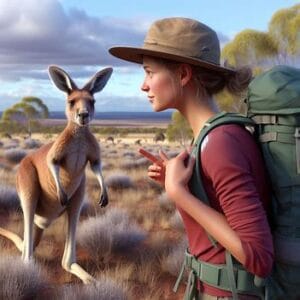
Capturing and Maximising Your Wildlife Encounters
Getting the most out of your Australian wildlife experience as a backpacker is a combination of preparation, patience, and respect. A few simple habits make the difference between a blurry distant photo and a genuine memory.
- Gear up properly — a high-quality camera or a smartphone with a strong zoom allows you to photograph wildlife at a safe distance without disturbing the animal. For recommendations on durable outback gear and electronics protection suited to regional farm environments, check the Backpack Australia Resources Page.
- Document your journey — keep a travel journal or blog to record the emotions and context of your sightings. The kangaroo you spotted between the citrus rows at 6:00 AM on your third morning in Mildura will mean far more in ten years if you wrote down how it felt.
- Educate yourself beforehand — understanding each animal’s habits, habitat preferences, and role in its ecosystem adds genuine depth to every encounter. Our team at Backpack Australia regularly shares this practical advice with travelers preparing for regional placements, because understanding the environment you are working in makes you a better worker and a more engaged traveler.
- Seek local expertise — guided tours and talks hosted by local conservationists and Indigenous rangers offer insights that no guidebook can replicate.
Kangaroos: Australia’s Hopping Icon
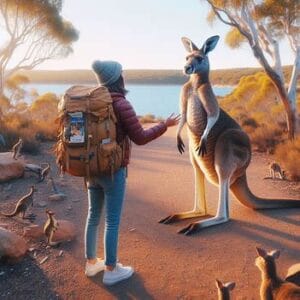
The kangaroo is the undisputed national symbol of Australia — powerful, agile, and endlessly fascinating to observe bounding at speed across wildly varied landscapes. For backpackers encountering Australian wildlife for the first time, a mob of kangaroos grazing at dawn is frequently the moment the country becomes real.
Where and How to Spot Kangaroos
- Timing is everything — kangaroos are most active during the cooler parts of the day: early morning and late afternoon. If you are already awake for a 4:30 AM farm start, you have a significant advantage over tourists sleeping in city hotels.
- Best locations — national parks, protected wildlife reserves, and the edges of regional agricultural land are all reliable spotting environments. The boundaries between farmland and bushland are particularly productive at dawn.
- Keep a respectful distance — use binoculars to observe natural behaviour without interference. Approach slowly and quietly if you happen to be nearby; sudden movements cause the mob to scatter.
- Never feed them — feeding kangaroos disrupts their natural diet, makes them dependent on human contact, and can make them aggressive. This applies everywhere in Australia, including working hostel grounds where kangaroos sometimes graze at dusk.
Koalas: The Tree-Dwelling Marsupial
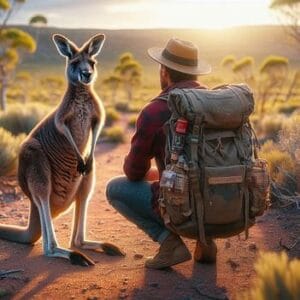
Koalas are universally beloved for their docile, sleepy appearance — but spotting one in the wild requires patience and a trained eye. These tree-dwelling marsupials spend the vast majority of their lives high in the eucalyptus canopy, and their dense grey fur makes them remarkably effective at blending into their surroundings.
Tips for Spotting Koalas on Your Working Holiday
- Look for signs before the animal — scratch marks on tree trunks and droppings at the base of gum trees are reliable indicators of koala presence in the area. Once you know what to look for, you will start seeing these signs constantly in regional eucalypt country.
- Prime habitats — eucalypt forests in rural regions that are cooler and less disturbed by heavy human activity offer the best chances. Coastal Queensland, parts of NSW, and rural Victoria all have strong koala populations.
- Scan slowly and patiently — start at the fork of large branches and work your way up. Koalas often wedge themselves into a fork and stay almost completely motionless for hours.
- Keep noise to a minimum — avoid sudden movements or loud sounds that could cause the animal to move higher into the canopy or become stressed.
Emus: The Gentle Giant of the Outback
The emu is Australia’s largest native bird and one of the most striking sights in regional Australia — towering, intensely curious, and surprisingly fast when it decides to move. For backpackers doing regional farm work across the outback and inland plains, emu sightings are a regular part of the daily landscape rather than a special occasion.
Emu Viewing Tips
- Where to look — open grasslands and the areas around water sources are the most reliable locations. Emus move toward water consistently and are often seen foraging for native plants and insects in the early morning.
- Be patient — emus travel remarkable distances and their presence in a particular area on any given day can be unpredictable. Visiting larger national parks where they are known to roam increases your odds significantly.
- Safety first — always maintain a safe, respectful distance. Emus are generally curious rather than aggressive, but they can become highly unpredictable if they feel cornered or threatened. Never approach one for a selfie, and never attempt to feed or touch them.
Frequently Asked Questions: Australian Wildlife and Backpacking

Do I need special gear to spot wildlife while doing farm work?
You do not need professional expedition equipment, but sturdy work boots, breathable UV-protective clothing, and a wide-brim hat are mandatory for spending long hours in the Australian sun and scrub regardless of wildlife spotting. A good camera or smartphone zoom is the main addition specifically for wildlife observation. Find comprehensive gear checklists on the Backpack Australia Resources Page.
When is the best time of day to photograph Australian wildlife?
Focus your photography during the golden hours at dawn and dusk. The lighting is spectacular, and animals like kangaroos and emus are most active during these cooler parts of the day — which conveniently aligns with the start and end of most regional farm shifts.
Is it safe to approach wildlife for a close photo?
No. Always maintain a safe, respectful distance from any native Australian animal. Kangaroos can deliver a powerful kick, emus can be unpredictable when threatened, and even koalas can scratch and bite if stressed by handling. Use binoculars and camera zoom rather than proximity — it produces better photos and protects both you and the animal.
Secure Your 88 Days and Enjoy the Wild Australia You Came For
Observing Australian wildlife as a backpacker is one of the great privileges of the working holiday experience — but you cannot enjoy it fully if you are constantly stressed about finding legitimate regional work or watching your savings drain in an expensive city hostel. Every week spent unemployed is money lost and wildlife encounters you are missing because you are stuck in a city rather than out in the regional areas where these animals actually live.
Backpack Australia has direct contact with over 4,000 eligible employers and connects with virtually all the legitimate working hostels across the country. We know exactly who is hiring right now across every major agricultural region — from the citrus orchards of Mildura to the banana plantations of Tully. Joining our network is the fastest and most reliable way to knock out your 88 days, start earning immediately, and get back to experiencing everything this extraordinary country has to offer.
Sign Up for the Job Help Programme Newsletter to get immediate access to our exclusive employer and hostel networks today.
Conclusion
From the iconic kangaroo to the famously elusive koala and the towering, inquisitive emu, your encounters with Australian wildlife as a backpacker will be among the most vivid and lasting memories of your entire working holiday. By approaching every sighting with patience, respect, and genuine curiosity — keeping your distance, never feeding, and observing the signs of animal presence rather than just scanning for the animals themselves — you protect these incredible species and ensure that the encounters remain special for every traveler who comes after you. Strap on your boots, get out into the regions, and experience the real Australia.