
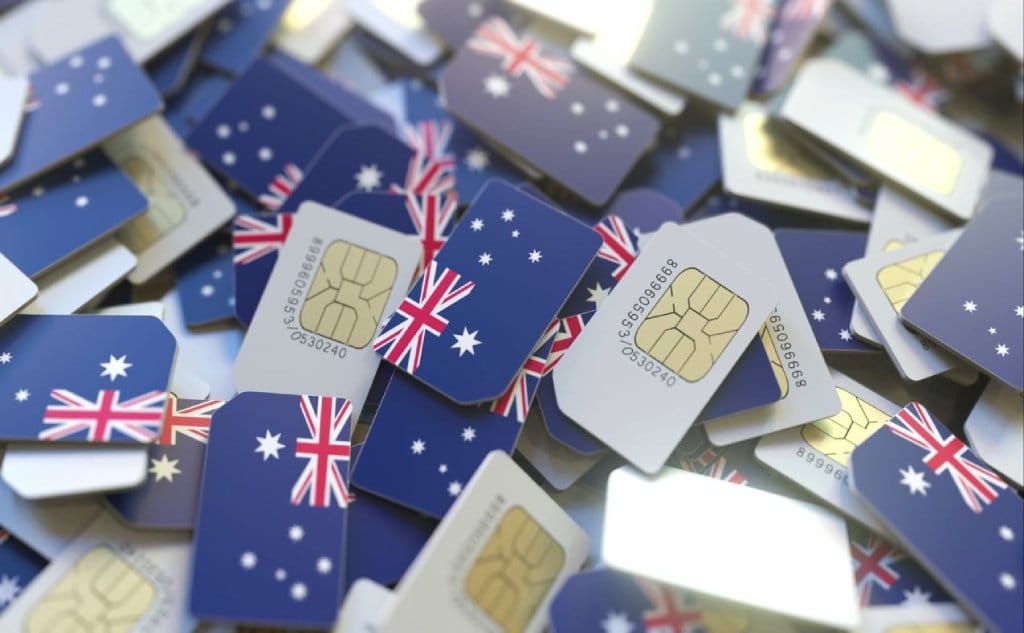
Choosing the right SIM card in Australia for backpackers is one of the first and most important decisions you will make after landing. Australia’s vast and often remote landscapes make mobile coverage far from guaranteed — and when you are deep in the agricultural heartland completing your 88 days of regional work, a dead zone is not just inconvenient, it is a genuine problem for your visa and your income. Whether you are coordinating with farm contractors in rural Queensland, navigating the East Coast backpacker trail, or working a hospitality shift in Melbourne, this guide covers every network, every MVNO, and every practical tip you need to stay connected throughout your entire working holiday.
Why Your SIM Card Choice Matters for the 88-Day Regional Grind
When you transition from coastal party towns into the agricultural heartland to complete your 88 days of specified regional work, your phone becomes your most vital tool. Picture waking up at 4:30 AM to pick bananas in the sweltering humidity of Tully, Queensland, or spending long, dusty days pruning citrus trees under the blazing sun in Mildura, Victoria. In these remote environments, a reliable mobile connection is the difference between securing your next gig and being left stranded.
You need data to message contractors, check regional weather forecasts, know what gear to wear on site (always verify your farm clothing essentials on the Backpack Australia Resources Page), and verify your piece-rate payslips on the fly. You simply cannot afford a dead zone when a farmer is calling to offer you three months of steady tractor work. Our team at Backpack Australia sees this mistake constantly — backpackers who chose the wrong network and lost work opportunities because they had no signal when it mattered most.

The Big Three: Choosing Your Primary Network
Australia’s mobile infrastructure is dominated by three main network operators. Choosing the right one for your itinerary is the single most important SIM card decision for backpackers in Australia.
Telstra
Telstra offers the most extensive network coverage in Australia, making it particularly valuable if you plan to explore rural and remote areas. If you are driving a campervan across the Nullarbor Plain, working on an isolated cattle station, or completing farm work in any of the major regional hotspots, Telstra is generally considered the safest and most reliable bet.
Optus
Optus provides excellent service with competitive pricing and solid coverage across major cities and regional areas. It is a strong middle-ground option if you plan to stick mostly to the East Coast backpacker trail — think Brisbane, Sydney, Melbourne, and the stops in between.
Vodafone
Vodafone consistently offers the best deals in urban centres and is an excellent choice for city-based workers. If you plan to spend six months working as a barista or in hospitality in Melbourne or Sydney, Vodafone is a solid, budget-friendly choice — just be aware its rural coverage is noticeably thinner than Telstra’s.
Budget-Friendly MVNOs: The Smart Backpacker’s Secret
Instead of paying premium prices directly to the big three, savvy backpackers in Australia use MVNOs — Mobile Virtual Network Operators. MVNOs operate on the infrastructure of the major providers but offer significantly lower prices, making them ideal for budget-conscious working holiday makers.
MVNOs on the Telstra Network
- Tangerine — strong value with no awkward gap between payment months when you might lose data. Note that even though Telstra has the best rural reach, Tangerine restricts usage in some remote outback areas, so check their coverage map carefully before committing.
- Aldi Mobile — excellent deals on data-heavy plans, but be aware their payment cycle can leave you without data between months unless you top up proactively.
- Boost Mobile — uses Telstra’s full network and offers great coverage with affordable packages, making it a particularly popular choice among working holiday makers doing regional farm work.
MVNOs on the Optus Network
- Amaysim — operates on Optus’ network and provides flexible plans with generous data allowances. A reliable choice for East Coast travelers.
MVNOs on the Vodafone Network
- TPG Mobile — competitive pricing with the benefits of Vodafone’s extensive urban coverage. Best suited to backpackers based in major cities.
Prepaid vs. Postpaid: What Is Best for Backpackers in Australia?
For almost all working holiday makers, prepaid is the clear choice for your Australian SIM card.
- Prepaid SIMs give you complete control over spending with no contract commitment — perfect for travelers whose plans change frequently.
- Postpaid SIMs offer more extensive data and call packages, but getting a postpaid contract typically requires a credit check, an Australian bank account, and proof of a long-term residential address. Most backpackers simply do not have these upon arrival.

Where to Buy Your SIM Card in Australia
Getting your hands on a SIM card in Australia as a backpacker is straightforward once you land.
- Airports, convenience stores, and branded retail shops are the easiest first stop on arrival.
- Local supermarkets and electronics stores often have competitive deals on prepaid starter packs.
- Use comparison websites like WhistleOut or Finder to compare plans based on your specific data needs and budget before committing.
- Check online travel forums and working holiday Facebook groups for up-to-date reviews from other backpackers who have recently made the switch.
Pro tip: Always carry your physical passport when purchasing a SIM in-store. Australian law requires proof of identity to activate any mobile service.
Navigating Phone and Data Plans: What to Consider
Before purchasing a plan at the airport arrivals gate, think carefully about your actual daily habits and itinerary.
Key Factors for Backpacker SIM Plans in Australia
- Data allowance — streaming, navigation, and social media consume data fast. Estimate your daily usage honestly and choose a plan that won’t run dry mid-month.
- Call and text inclusions — if you plan to make local calls to employers, hostels, and farm contractors, check what is included carefully.
- International roaming — useful if you plan brief visits to nearby countries like New Zealand or Indonesia during your stay.
- Wi-Fi availability — leverage free Wi-Fi in hostels, cafés, and public spaces to preserve your mobile data for when you genuinely need it in the field.
- Offline maps — when you are three hours deep into a dirt track looking for a remote macadamia farm, offline Google Maps are an absolute lifesaver. Download them before you leave the last town with reliable signal. For vehicle mount and charger recommendations, check the Backpack Australia Resources Page.
- Emergency numbers — always have 000 saved and accessible. It works even without credit or outside your specific network’s coverage zone, provided any network reaches that area.
Frequently Asked Questions: SIM Cards in Australia for Backpackers
Can I use an eSIM in Australia?
Yes. Most major Australian providers and many MVNOs now offer eSIM capabilities. If you have a modern smartphone — iPhone 11 or newer, or a recent Samsung Galaxy model — you can set up your Australian plan digitally before you even land, bypassing the need for a physical SIM entirely.
How easy is it to switch providers in Australia?
Very easy. Australian consumer law mandates that you can port your mobile number to a new provider seamlessly. If you start on Vodafone in Sydney but then move to rural Queensland for fruit picking, you can buy a Telstra or Boost Mobile SIM from a supermarket and transfer your number across within a few hours.
Will my unlocked phone work in Australia?
Yes, as long as your phone is completely unlocked from your home country’s carrier. Australia uses standard GSM networks, with 3G currently being phased out and 4G and 5G as the primary networks — both of which are compatible with the vast majority of modern smartphones.

Fast-Track Your Farm Work While You Stay Connected
Having the right SIM card as a backpacker in Australia is just the first piece of the puzzle. The biggest mistake travelers make is arriving with a great phone plan but no reliable path to regional work — spending weeks scrolling through outdated Facebook groups and burning through savings in expensive city hostels while waiting for a farmer to reply.
Backpack Australia has direct contact with over 4,000 eligible employers and connects with virtually all working hostels across Australia. We remove the guesswork, eliminate the scams, and help you knock out your 88 days of eligible work fast — so you can start earning sooner, lock in your visa extension, and get back to doing what you actually came here for.
Sign Up for the Job Help Programme Newsletter to get immediate access to our exclusive employer and hostel networks today.
Conclusion
Navigating SIM cards in Australia as a backpacker does not have to be complicated. By understanding the realities of regional coverage, choosing the right network for your specific itinerary, and leveraging budget-friendly MVNOs to keep costs low, you can set yourself up for a stress-free, fully connected working holiday. Compare plans on WhistleOut before you commit, pick up your SIM on arrival with your passport in hand, download offline maps before you head bush, and save 000 to your phone from day one. The right connection keeps your adventure — and your income — running smoothly from the first day to the last.