
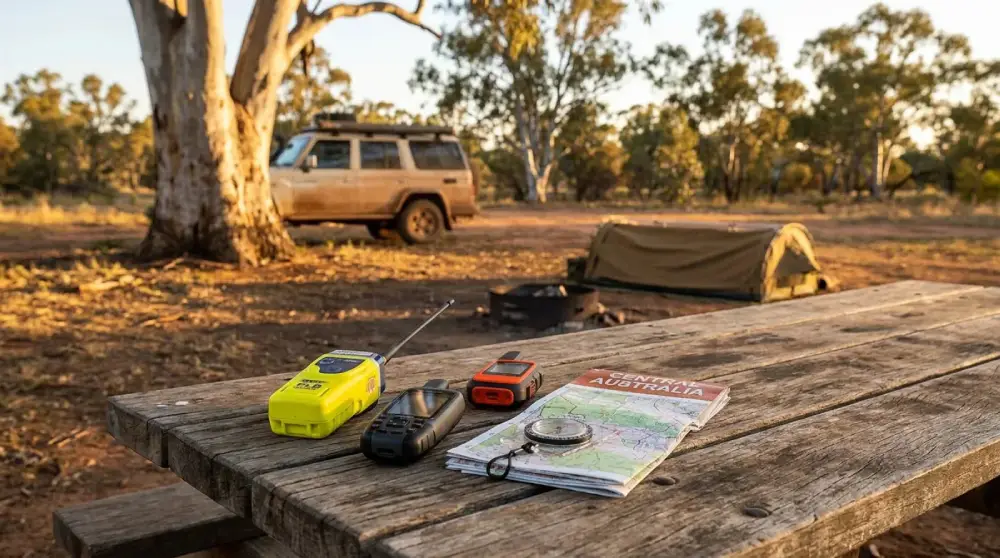
Understanding EPIRBs and PLBs as a backpacker in Australia could genuinely be the difference between a survivable emergency and a tragedy. Trekking through Australia’s vast landscapes — from lush rainforests to the stark beauty of the outback — is unparalleled. So are the risks once you step off the beaten path. Whether you are chasing the harvest trail for your visa extension or driving a $2,000 van across the Nullarbor, carrying an emergency beacon is one of the most important safety decisions you will make on your working holiday. This guide covers exactly how these devices work, why regional farm work specifically increases your need for one, how to choose the right model, and when activation is genuinely appropriate.
What Is an EPIRB and How Does It Actually Save Lives?
An Emergency Position Indicating Radio Beacon — EPIRB — is a compact device designed to send a distress signal when you are in a genuinely critical situation. Originally developed for maritime distress and rescue, this technology is equally vital on land, particularly across the vast and remote regions of Australia where mobile coverage simply does not reach.
Here is exactly what happens when the activation pin is pulled:
- The device emits a distress signal that is picked up almost instantly by a global satellite network.
- The signal is relayed directly to a local rescue coordination centre — in Australia, this is managed by the Australian Maritime Safety Authority (AMSA).
- Built-in GPS technology transmits your precise location, ensuring search and rescue teams know exactly where to find you rather than searching a wide, undefined area.
This pinpoint location accuracy is critical in Australia, where vast distances and genuinely rugged terrain can turn a straightforward rescue into a multi-day search operation without it.
Why Backpackers Doing Regional Farm Work in Australia Need an EPIRB or PLB
If you are a working holiday maker, you are not just lounging on city beaches. You are sweating through the crushing humidity of picking bananas in Tully, Queensland, or battling frost-covered 4:00 AM starts pruning vines in Mildura, Victoria. To hit piece-rate targets and complete your 88 days, you frequently travel deep into regional agricultural hubs where mobile phone reception is a luxury, not a guarantee.
In these areas, a blown tyre on a desolate dirt road or a sudden medical emergency on an isolated property can escalate from inconvenience to genuine life-threatening crisis within minutes. Our team at Backpack Australia gives this practical advice to every traveler we help prepare for remote regional jobs, because the outback genuinely does not care about your itinerary or your travel insurance policy. An EPIRB or PLB for backpackers in Australia is not an overcautious extra — it is a fundamental safety layer for anyone spending meaningful time in regional areas.
Weather Extremes
Australia’s weather is fiercely unpredictable. Sudden storms, flash flooding, and drastic temperature swings between day and night in arid regions can transform a manageable situation into a dangerous one quickly. An activated beacon ensures help is genuinely on the way if severe weather traps you in a vulnerable position.
Wildlife Hazards
Encounters with venomous snakes and spiders are a real risk in tall grass and fruit orchards across regional Australia, particularly during fruit picking and farm maintenance work. A beacon allows you to alert emergency services immediately in the event of a venomous bite or other severe medical emergency, regardless of mobile signal availability.
Choosing the Right Emergency Beacon for Australian Conditions
When gearing up for outback travel or remote farm placements, you need equipment that performs as reliably as you do. For tough clothing, work boots, and reliable safety gear suited to Australian regional conditions, check the curated essentials on the Backpack Australia Resources Page.
When specifically selecting an EPIRB or PLB for travel in Australia, prioritise these features:
- Global satellite coverage — confirm the device is explicitly supported across the entire Cospas-Sarsat international satellite network so it functions reliably anywhere in regional Australia, not just along populated coastal corridors.
- Durability — look for a model rated to withstand dust, heat, and water exposure consistent with Australian outback and farm conditions.
- Battery life — select a device guaranteed to operate continuously for a minimum of 48 hours once activated, giving rescue teams a realistic window to respond in remote terrain.
Using and Maintaining Your Beacon Correctly
Owning the device is only half the equation. Perform regular functional checks to confirm the beacon remains operational and the battery is properly charged — most models include a self-test function for this purpose. Store the beacon somewhere accessible but protected from accidental activation, such as a dedicated pocket in your pack rather than loose alongside other gear.

Frequently Asked Questions: EPIRBs and PLBs for Backpackers in Australia
What is the difference between an EPIRB and a PLB?
Both devices use the identical satellite rescue network and life-saving technology. An EPIRB is traditionally larger, designed for maritime use, and floats upright in water. A PLB (Personal Locator Beacon) is smaller, designed to be strapped to a backpack or worn on a belt, and generally requires manual pointing toward open sky to transmit effectively. For land-based working holiday makers and backpackers, a PLB is the practical choice for size and portability.
Is there a subscription fee to use the satellite network?
No. Unlike satellite messenger devices such as a Garmin inReach, standard EPIRBs and PLBs operate on the international Cospas-Sarsat network, which is free to use indefinitely. You purchase the device once, register it for free with the Australian Maritime Safety Authority (AMSA), and it is ready for emergency use with no ongoing costs.
Can I activate it if my car simply breaks down?
An emergency beacon should only be activated in situations of genuine, imminent danger to life. If your vehicle breaks down but you have adequate water, food, shade, and are not in immediate physical danger, the correct response is to wait for a passing vehicle or assistance via other means. If you are stranded in extreme heat with dwindling water supplies and no realistic prospect of passing traffic, that situation has become life-threatening and activation is appropriate. According to AMSA’s official emergency beacon guidance, beacons are designed specifically for situations of grave and imminent danger — using the distinction correctly matters for both your safety and the rescue system’s effectiveness for others.
Combining Your Beacon with Smart Outback Safety Practices
An EPIRB or PLB is a critical safety tool, but combining it with other sensible precautions significantly increases your overall security in remote Australia. Travel with at least one other person whenever possible in genuinely remote areas. Stay current with local weather and wildlife advisories before heading into any new regional area. Carry basic first aid knowledge and supplies — the minutes before rescue arrives are often the minutes that matter most.
Using an emergency beacon also aligns with sustainable travel practices in a way many travelers do not initially consider. A swift, accurately located rescue significantly reduces the environmental footprint of large-scale, prolonged search operations — fewer vehicles, fewer aircraft hours, less disturbance to fragile regional ecosystems during an extended search.
Fast-Track Your 88 Days Without Compromising on Safety
Safety in the outback is paramount — but so is your time, and the two are connected. If you are heading into regional Australia, you are likely working toward your 88 days of specified work for a visa extension. Thousands of backpackers waste weeks and bleed their savings sitting in expensive city hostels, gambling on sketchy classified ads, and driving hundreds of kilometres to dead-end towns simply because they lack the right connections.
Backpack Australia has direct, established contact with over 4,000 eligible regional employers and connects with virtually all the reputable working hostels across the country. We bypass the scammers and put you directly in touch with reliable farmers who need workers right now — in placements where transport, accommodation, and safety standards are genuinely accounted for. Knock out your 88 days fast, start earning real money sooner, and secure your visa extension with confidence.
Sign Up for the Job Help Programme Newsletter to get immediate access to our exclusive employer and hostel networks today.
Conclusion: Adventure with Confidence
An EPIRB or PLB is essential safety gear for any backpacker spending meaningful time in regional Australia — a small, affordable device that provides genuine peace of mind across some of the most remote and beautiful landscapes on earth. Pair it with sensible travel practices, basic first aid knowledge, and a clear understanding of when activation is appropriate, and you step into the Australian wild prepared rather than exposed. Gear up, stay smart, and explore with the confidence that comes from knowing help is always within reach.