

Your working holiday legacy from Australia is not decided on the flight home — it is built in dozens of small, ordinary decisions made across your entire trip. Most people arrive thinking about where they’ll go and what they’ll see. Very few arrive thinking about what they’ll actually walk away with twelve months later. A tan fades. A social media highlight reel gets scrolled past within a week of posting. But a working holiday done with a bit of structure can hand you three things that genuinely outlast the trip: a resume line that means something, a bank balance that proves you can manage money under pressure, and a set of stories you’ll still be telling at 40. This guide is about building all three at once, without turning your adventure into a spreadsheet.
Three Outcomes Worth Designing For
Rather than one big abstract “purpose,” it’s more useful to think about three concrete, checkable outcomes you can actually measure by the time your visa runs out.
1. A Resume Line That Actually Means Something
“Worked in Australia for a year” tells a hiring manager nothing. “Managed daily output targets across a six-month agricultural placement, coordinated logistics with a rotating crew of international workers, and adapted to three different regional employers” tells them a great deal. The difference is not the job itself — it’s whether you paid attention to what you were actually doing while you did it. Notice when you’re solving a problem, training someone newer than you, or adapting to a system that’s different from how you’d do it at home. Write it down. You won’t remember the specifics in eighteen months, and generic “backpacking Australia” on a CV convinces nobody.
2. A Bank Balance That Proves Something About You
Anyone can spend a year’s savings on a year of travel. The harder, more useful skill is coming out the other end with more than you went in with, or at least without the panic of an empty account three weeks before your flight. This isn’t about being tight — it’s about being able to say, honestly, that you managed real money in a foreign country under real pressure (unfamiliar costs, seasonal income, currency swings) and it worked out.
3. A Story Worth Telling Twice
Not every day needs to be extraordinary. But a trip with zero discomfort in it produces zero stories. The 4:30 AM alarms, the frost on your fingers before a citrus shift, the humidity that soaks through your shirt in the first ten minutes of a Queensland banana farm — these are the parts people actually lean in for later. Comfort produces photos. Discomfort produces stories. Aim for a healthy mix of both.

Where Regional Work Fits Into the Legacy
If you’re chasing a second or third-year visa, your 88 days of regional work is not a detour from the “real” trip — it’s frequently the part that ends up mattering most in hindsight. It is also, without question, the hardest part.
Picture six weeks pruning vines in the cold of a Victorian winter morning, breath fogging in front of you before 6 AM, versus six weeks hauling fruit through the wet-season humidity of Far North Queensland. Both are genuinely difficult in completely different ways, and both teach you something that a beach day never will: how you behave when you’re tired, uncomfortable, and still expected to perform. Employers on piece rates don’t care how you’re feeling — they care what’s in the bin at the end of the day. That’s an uncomfortable but genuinely clarifying kind of feedback loop.
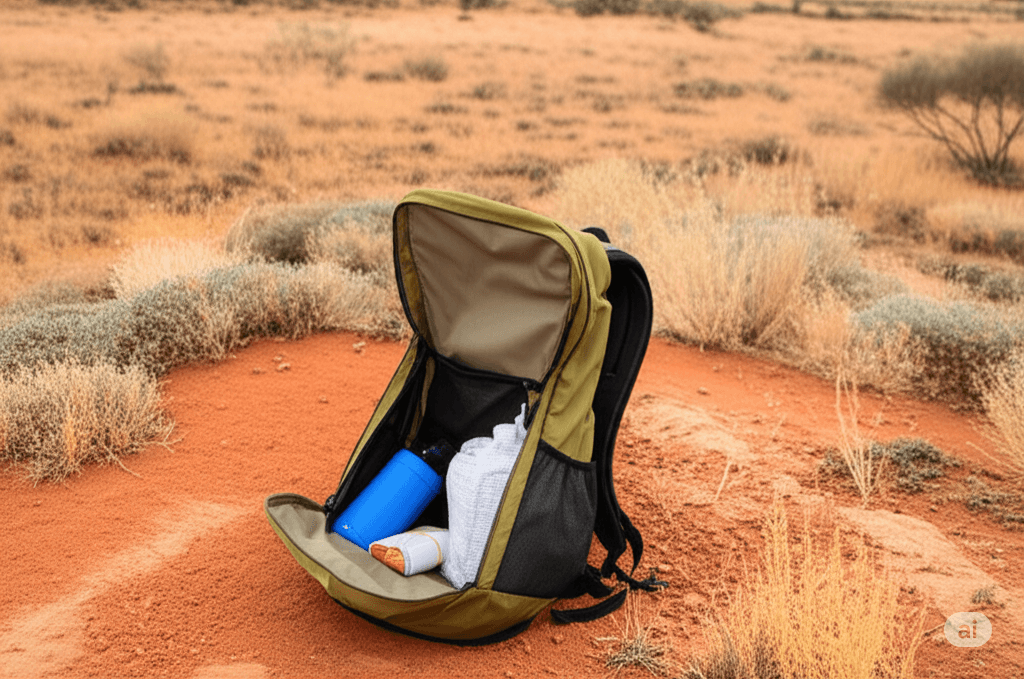
Show up for it properly equipped. A hat that actually blocks sun, boots that survive a full season, and clothing that doesn’t fall apart after the third wash all matter more than people expect before their first shift. The Backpack Australia Resources Page has field-tested recommendations if you’re not sure where to start.

Small Habits That Compound Into a Legacy
Keep a Running Note, Not a Diary
You don’t need to journal for twenty minutes every night. A single sentence at the end of each day — what happened, what you learned, who you met — is enough. Six months later, that list becomes the raw material for both your resume and the stories you’ll tell.
Track Money Weekly, Not Daily
Daily tracking burns people out and gets abandoned within a fortnight. A five-minute weekly check-in — what came in, what went out, what’s left — is sustainable for a year and gives you the pattern-recognition to catch a problem before it becomes a crisis.

Say Yes to the Uncomfortable Invitation Once a Month
Not every night out, not every tour — but once a month, say yes to something that makes you a little nervous. A solo hike, a conversation with someone from a completely different background, a job you weren’t sure you could physically handle. This is where the actual growth lives.
Pick One Skill to Actually Get Good At
Not “travel” as a vague skill — something specific. Cooking on a tight budget. Driving manual. Reading a farm supervisor’s mood before they say a word. A second language conversation. Pick one, and by the end of the trip you’ll have something concrete rather than a general sense of having “grown.”
Frequently Asked Questions
What if my working holiday doesn’t feel meaningful while I’m in it?
Most of it won’t, in the moment. Meaning tends to show up in hindsight, once you can see the shape of the whole year rather than just the exhausting Tuesday you’re currently living through. Keep the running note anyway — you’re building the evidence you’ll need later, even if it doesn’t feel significant today.
Is it worth doing regional farm work if I don’t need the visa extension?
Often yes, for reasons that have nothing to do with the visa. It’s one of the few environments left where you’re judged purely on output and reliability, stripped of small talk or personal branding. Some people find that oddly restful. Others hate it. You won’t know which camp you’re in until you try it.
How do I stop comparing my trip to everyone else’s on social media?
Assume every feed you see is a highlight reel, because it is. Nobody posts the three-hour bus delay or the argument with a hostel roommate over dishes. If you want an accurate benchmark, talk to the person next to you in the packing shed, not the internet.

Get the Regional Work Sorted So You Can Focus on the Rest
None of this matters much if you spend your first two months in a city hostel refreshing job boards that never reply. That’s not character-building — it’s just wasted time and burnt savings, and it’s the single most common way a working holiday quietly goes sideways before it’s even properly started.
Backpack Australia has direct contact with over 4,000 eligible regional employers and connects with virtually all the legitimate working hostels across the country. We remove the guesswork from finding your 88 days, so you can get through the job-hunting phase quickly and put your energy into the parts of the trip that actually build your legacy.
Sign Up for the Job Help Programme Newsletter to get immediate access to our employer and hostel networks.
Final Thought
Nobody remembers their trip as a list of countries or a number in a bank account. They remember the version of themselves that came home able to handle something they couldn’t handle before they left. Build toward that, one ordinary day at a time, and the legacy of your working holiday in Australia takes care of itself.