
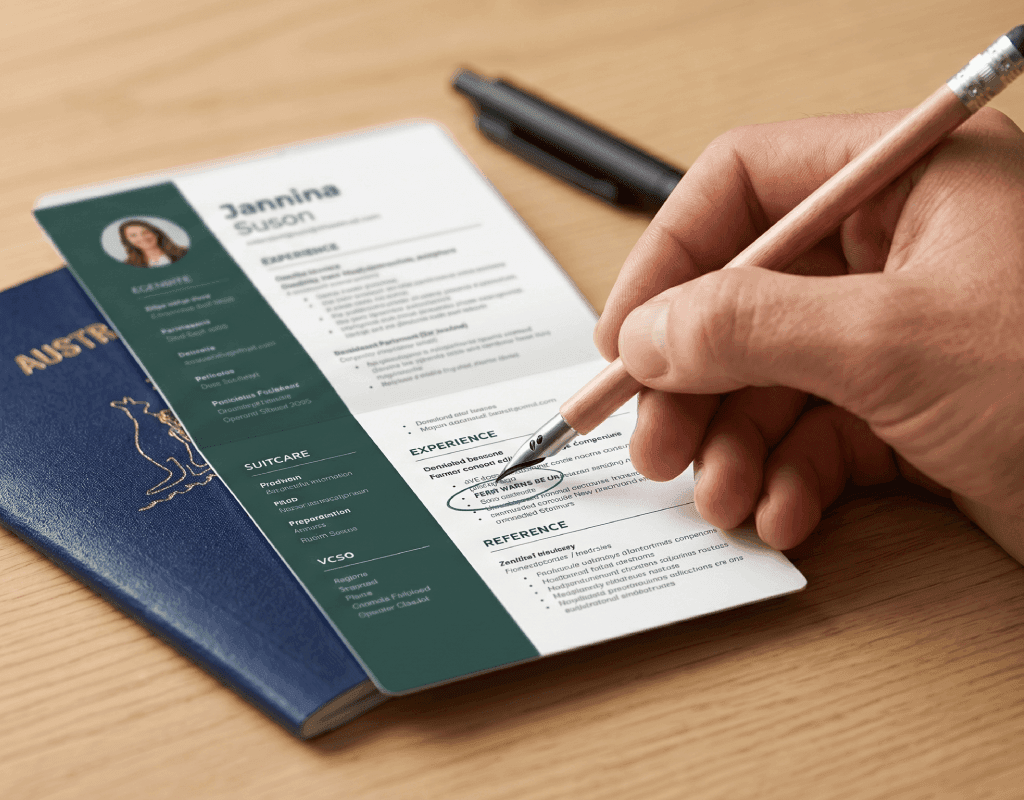
Finding backpacker jobs Australia-wide has never been more competitive. You’ve landed, the visa is stamped, the pack is on your back — and your bank account is already draining. You’ve applied for fifteen jobs this week and heard back from nobody. The harsh reality of working holiday jobs in Australia in 2026 is that farm managers, hostel operators, café owners, and labour hire companies are swamped with applications. They spend an average of six seconds scanning a resume before deciding whether to bin it or call you. Six seconds. This guide shows you exactly how to fix that — whether you are chasing hospitality shifts in Melbourne or securing farm work for your visa extension.
The Brutal Reality of the 2026 Backpacker Job Market in Australia
The backpacker jobs Australia market is strong in 2026, but highly competitive. With the Fair Work Commission increasing the national minimum wage to $24.10 per hour as of July 2025, employers are being heavily selective because their labour costs are higher. You need to stand out — and your resume is the very first place you either win or lose that opportunity.
Our team at Backpack Australia works directly with travellers preparing for regional roles every day. The advice below is exactly what we share with working holiday makers who want to go from zero callbacks to choosing their own hours.
The Anatomy of a Hired Backpacker’s Resume
1. Contact Information: Hyper-Local Is Key
Backpackers constantly make the mistake of leaving outdated information on their resumes. If you updated your phone number to an Aussie SIM but forgot to change it on your document, the employer literally cannot hire you. Furthermore, if your resume lists an address in Dublin or Toronto while you are currently picking mangoes in Mareeba, a Queensland employer will assume you are overseas and won’t bother calling.
- Update your address to your current Australian suburb or town.
- Use a professional email address — ditch embarrassing childhood usernames.
- Never use an international phone number. Get an Australian SIM the day you land.
2. The Professional Summary: Your 30-Second Pitch
Stop making your resume all about what you want. A statement like “I am looking for work in hospitality to gain experience” tells the employer nothing about how you can help their business. A strong summary for working holiday jobs in Australia looks like this:
“Reliable and energetic hospitality professional with three years of high-volume café and bar experience across two countries. Currently based in Cairns and available immediately for full-time shifts. Known for fast service, upselling, and keeping a cool head in a busy kitchen.”
3. Work Experience and Power Words
List your jobs in reverse chronological order. Avoid passive, weak phrasing like “Responsible for…”. Australian employers respond to action verbs that demonstrate impact. Use this formula: Action Verb + What You Did + The Result.
- Managed — shows leadership
- Coordinated — shows organisation
- Delivered — shows results
- Resolved — shows you handle problems
- Generated — shows you made the business money
Instead of writing “Worked in a busy restaurant,” write: “Served up to 120 covers per shift in a high-volume beachfront restaurant, maintaining a 4.9-star customer rating across a six-month season.”
If you have any supervisory experience, highlight it. Regional employers under the Seasonal Worker Programme and Pacific Australia Labour Mobility scheme are actively looking for workers who can train staff or organise rosters.
4. Skills, Certifications, and Gear
Keep your skills section tight, using two columns to list spoken languages, software knowledge (POS systems, Excel), and physical abilities (heavy lifting, working in heat). In 2026, holding specific Australian certifications can be the difference between landing backpacker jobs in Australia and being ignored entirely.
- RSA (Responsible Service of Alcohol) — mandatory for hospitality roles.
- White Card (Construction Induction Training) — mandatory for construction and traffic control.
When you step onto a job site or farm, having the right equipment — steel-capped boots, high-vis shirts, durable gloves — proves you are ready to start immediately. Find everything you need to get job-site ready on the Backpack Australia Resources Page.
Boots-on-the-Ground: Surviving Regional Farm Work in Australia
Backpacking in Australia isn’t just selfies at the Sydney Opera House. If you are heading out to complete your specified regional work, your resume needs to prove you have the grit for 4:30 AM wake-up calls. Farm work is physically demanding — you might battle tropical humidity picking bananas in Tully, Queensland, or endure frost-bitten mornings doing winter citrus picking in Mildura, Victoria. Many of these roles are paid on piece rates, meaning you earn exactly what you pick. A resume that highlights physical stamina, previous agricultural work, and extreme reliability will go straight to the top of the pile for a busy farm manager.
According to the Australian Department of Agriculture, the Harvest Trail remains one of the most reliable pathways for working holiday makers to complete their 88-day regional work requirement.
The Digital Game: Beating the ATS Robot for Backpacker Jobs Australia
The game has changed. Many Australian employers — including large farm labour hire companies, retail chains, and hotel groups — now use Applicant Tracking Systems (ATS). An ATS scans your resume for specific keywords before a human ever sees it. If the job ad asks for “customer service” and your resume says “client-facing,” the system will filter you out. To beat the robot, mirror the exact language used in the job advertisement.
Where to Find Working Holiday Jobs in Australia
Backpackers in 2026 are finding farm work Australia and hospitality roles through these key platforms:
- Seek.com.au — Australia’s largest job board.
- Indeed Australia — strong for casual and regional roles.
- Harvest Trail — managed by the Australian Government, specifically for seasonal farm work.
- Working Holiday Facebook Groups — active community postings.
- Labour Hire Firms — Programmed and Skilled Group are actively recruiting, especially in WA, NT, and QLD.
If you use AI tools like ChatGPT to draft your resume, personalise the output heavily with real numbers and results. Recruiters are getting very good at spotting generic, robotic resumes.
Name Your File Like a Marketer
Never save your resume as “CV Australia Version 4.docx”. Use a formula that markets you before they even open the file: [Your Name] – [Your Biggest Strength]. For example: “Sofia Greco – Reliable Farm Worker Full Licence”. Always save it as a PDF.
Visas and Earning Potential for Backpacker Jobs in Australia
Under the Working Holiday Visa (subclass 417 and 462), you can work for the same employer for up to six months. A standard 38-hour week on the $24.10 minimum wage puts roughly $915 in your pocket before tax, with a 15% tax rate on the first $45,000 earned. Always lodge a tax return at the end of the financial year to claim your refund.
88 Days Regional Work: Top Hotspots in 2026
To unlock a second-year visa, you need 88 days of specified regional work. A third year requires an additional 179 days. These are the top regional areas with genuine labour demand right now for backpacker jobs Australia:
- Bundaberg, QLD — tomatoes, capsicum, blueberries
- Cairns & Atherton Tablelands, QLD — mangoes, bananas, tourism
- Mildura, VIC — citrus, grapes
- Darwin, NT — hospitality, construction, tourism
- Kununurra, WA — melons, mangoes, sandalwood
- Griffith, NSW — wine grapes, citrus
Frequently Asked Questions: Backpacker Jobs Australia
Do I need a cover letter for Australian backpacker jobs?
For casual hospitality or farm work, a cover letter is rarely required if your resume summary is strong. However, if you are applying for a professional role, a tailored cover letter is essential.
Can I use an international phone number on my resume?
Absolutely not. Australian employers will not pay international calling rates to reach a casual worker. Get an Australian SIM card the day you land and put that number on your resume immediately.
Do I need a Tax File Number (TFN) before applying?
You don’t legally need a TFN to apply, but you will need one the moment you are hired to avoid being taxed at the maximum emergency rate. Apply for your TFN online as soon as you have a stable Australian address.
Fast-Track Your Search for Backpacker Jobs in Australia
Here is the ultimate truth about the Australian backpacker circuit: time is money. Every week you spend sitting in an expensive city hostel endlessly tweaking your resume and applying to online black holes is thousands of dollars in potential wages lost.
Backpack Australia has direct, established contact with over 4,000 eligible employers and connects with virtually all the working hostels across the country. We know exactly who is hiring right now, who signs off on 88-day visa extensions legitimately, and who pays reliable piece rates. Knock out your 88 days of eligible work fast, secure your visa extensions, and get back to doing what you came here to do.
Sign Up for the Job Help Programme Newsletter to get immediate access to our exclusive employer and hostel networks today.
Conclusion
Your resume is more than a piece of paper — it is your passport to funding your Australian adventure. By cutting the fluff, highlighting your reliability, optimising for ATS robots, and proving your worth to regional employers, you will go from zero callbacks to choosing your own hours. Update your contact details, refine your power words, and get out there. The best backpacker jobs Australia has to offer are waiting — see you on the road.