

Backpacker homesickness in Australia is one of the most common and least talked-about challenges of the working holiday experience. You have finally made it — the vast, sun-drenched continent stretches out before you, the adventure beckons, and the promise of new experiences and a visa extension fills your chest. And then, out of nowhere, a photo of your family pops up on your feed, a familiar song plays in the hostel kitchen, and that exhilarating sense of freedom is replaced by a heavy ache for everything familiar. This feeling does not mean you have made a mistake. It means you are human. This guide breaks down exactly why homesickness hits so hard on a working holiday, and gives you the practical, actionable strategies to acknowledge it, manage it, and come out the other side with a stronger sense of self and a genuinely unforgettable Australian adventure.
Why Backpacker Homesickness Hits Hard in Australia
Homesickness is not a sign of weakness — it is a deeply natural human response to being abruptly separated from established support systems and familiar routines. Understanding the specific triggers that compound it during an Australian working holiday helps you manage it with far greater clarity.
The Loss of Routine and Familiarity
At home, your life has a steady rhythm: your own bed, your favourite local coffee shop, your predictable social patterns. Travel removes all of that simultaneously, replacing it with constant new environments, unfamiliar faces, and relentless daily decision-making. The result is disorientation, disrupted sleep, and a deep craving for predictability — all of which intensify homesickness for backpackers in Australia, particularly in the first few weeks.

The Social Overload vs. Social Isolation Paradox
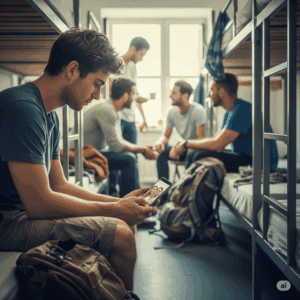
Despite being constantly surrounded by people in a busy hostel, many backpackers feel profoundly alone. The transient nature of travel means constant introductions followed quickly by goodbyes — which prevents the deep connections forming that make social interaction genuinely nourishing. You might feel socially exhausted and yet still deeply lonely at the same time, missing the effortless ease of relationships with people who already know you.
Communication Gaps and Time Zones
Significant time differences make real-time conversations with family and friends genuinely difficult. Missing important life events back home — birthdays, milestones, moments you would normally be part of — deepens the sense of disconnection and can make the distance feel overwhelming in ways that have nothing to do with Australia itself.
Perfectionism and the Pressure to “Love Every Minute”
There is enormous social pressure on working holiday makers to be constantly “on” — documenting perfect moments, projecting constant enthusiasm, and matching the curated highlight reels on social media. When the reality of a hard week on the farm or a lonely Sunday in a new town does not match that image, guilt and shame compound the homesickness significantly. This is one of the most important myths to dismantle: you are allowed to have difficult days.
Physical Exhaustion and Illness
Lingering jet lag, a stomach bug, a minor injury, or simply the cumulative physical toll of farm work all lower your emotional resilience. When your body is struggling, your desire for familiar comfort — your own bed, your mum’s cooking, your regular doctor — intensifies in a way that can feel almost unbearable.

The Gritty Reality: Homesickness and Regional Farm Work
When you transition from the social energy of city hostels to regional Australia to complete your 88 days of specified work, backpacker homesickness can hit with unexpected force. Our team at Backpack Australia works with travelers preparing for regional placements every season, and we know firsthand that the culture shock of agricultural work is real and deserves to be taken seriously.
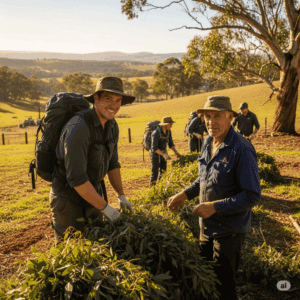
You are not just missing your home comforts anymore — you are physically exhausted before 9:00 AM from picking bananas in the suffocating tropical humidity of Tully, Queensland, or you are navigating freezing pre-dawn mornings on a piece-rate citrus contract in Mildura, Victoria, where your daily wage depends entirely on how fast your aching hands can move. When you are that tired and that far from everything familiar, the longing for home becomes significantly amplified.
Being properly equipped physically can have a profound impact on your mental resilience. The right heavy-duty workwear, UV-protective clothing, and reliable gear reduce the physical stress that compounds emotional difficulty. Find our top recommendations for surviving regional farm conditions on the Backpack Australia Resources Page.
Practical Strategies to Overcome Backpacker Homesickness in Australia
Homesickness is a passing phase, not a permanent state. Acknowledging it actively and managing it with specific strategies can completely transform your Australian experience.
Acknowledge and Validate Your Feelings
Give yourself explicit permission to feel sad, lonely, or homesick without judgment. These feelings are completely valid. Talk about them with other travelers — you will find that the vast majority have experienced the same thing and felt the same guilt about it. Naming the feeling out loud reduces its power significantly.
Stay Connected Strategically
Find a healthy balance between staying in touch and being present in your new environment. Schedule specific times for video calls with family that account for time zones — having a call to look forward to gives the week structure. Send longer, honest messages about your ups and downs rather than just posting highlight reels, but avoid all-day constant contact that prevents you from engaging with the world directly in front of you.
Build a New Community on the Road
Actively seek out new connections rather than waiting for them to happen. Participate in hostel-organised events — BBQs, movie nights, group excursions. Spend time in communal kitchens, which are natural conversation hubs. Regional farm work, despite its physical difficulty, is one of the most reliable community-building environments on the entire backpacker circuit: the shared struggle of early mornings and piece-rate pressure creates some of the strongest travel friendships working holiday makers ever make.
Create Small Comforting Routines
Re-establish small daily anchors of familiarity to counter the constant disruption of travel. A consistent morning stretch, a regular coffee ritual, a weekly phone call home, or settling into a base location for a few weeks rather than moving daily all provide the sense of rhythm that reduces the disorienting feeling that fuels homesickness.
Embrace Solo Time as Self-Discovery
Reframe time spent alone as a genuine opportunity for self-discovery rather than evidence of social failure. Use journaling to process your emotions honestly, pursue interests you never had time for at home, and build a physical exercise habit — running, swimming, or stretching after a farm shift all provide a natural and significant mood boost.
Reconnect With Your “Why”
On the hardest days, return to the reason you came. Whether it is personal growth, earning money to extend your travels, or the specific goal of a second or third-year visa, reminding yourself that the regional work directly serves your larger adventure goal reframes the difficulty as purposeful rather than pointless.
Seek Professional Support if You Need It
If homesickness is severe, persistent, or significantly affecting your daily functioning, reach out for professional help without hesitation. According to Beyond Blue — Australia’s leading mental health support organisation — prolonged feelings of isolation, anxiety, and low mood are worth taking seriously and are highly treatable with the right support. In an immediate crisis, call 000. For non-emergency mental health support, Lifeline is available 24/7 on 13 11 14.
Frequently Asked Questions: Backpacker Homesickness in Australia
Is it normal to want to go home after only a week in Australia?
Completely normal. The first week is consistently the hardest — the initial adrenaline wears off, jet lag is still affecting your mood and emotional resilience, and the reality of the distance from home sets in all at once. Give yourself at least three to four weeks to adjust before making any drastic decisions about cutting the trip short.
How do I make friends as an introverted backpacker?
Hostel communal kitchens are genuinely the best environment for introverts. You do not need to be loud or outgoing — offering someone a spare ingredient or asking how to use the stove is enough to spark a genuine conversation. Look for other solo travelers in common areas; one-on-one connection is often far easier and more meaningful than group social events.
Will doing regional farm work make my homesickness worse?
It can feel more intense initially due to the physical shock and rural isolation. However, farm work almost always forces you into a tight-knit community of other backpackers facing the same gruelling conditions. That shared experience frequently leads to some of the strongest, most supportive friendships of the entire working holiday — bonds built quickly because the context demands genuine mutual support.
Fast-Track Your Farm Work and Reduce Financial Stress
One of the biggest triggers for backpacker homesickness and anxiety in Australia is the financial stress of sitting unemployed in an expensive city hostel while desperately hunting for eligible regional work. Every week spent jobless is money draining from your account and potential wages you will never recover — and that financial pressure compounds every other emotional difficulty significantly.
Backpack Australia has direct contact with over 4,000 eligible employers and connects with virtually all the working hostels across the nation. We help you bypass the scams, the dead ends, and the stress of going it alone — allowing you to knock out your 88 days of eligible work fast, start earning immediately, and get back to traveling and genuinely enjoying yourself.
Sign Up for the Job Help Programme Newsletter to get immediate access to our exclusive employer and hostel networks today.
Conclusion
Experiencing backpacker homesickness in Australia is not a failure — it is a sign that you have deep, meaningful connections waiting for you back home, and that you are doing something genuinely brave by putting distance between yourself and them. By acknowledging your feelings without shame, building new community connections actively, maintaining small daily routines, and accessing the right support when you need it, you give yourself every tool to move through homesickness rather than being stopped by it. You will emerge from this adventure with greater resilience, a global network of people who know exactly what you went through, and memories that will stay with you for the rest of your life.