
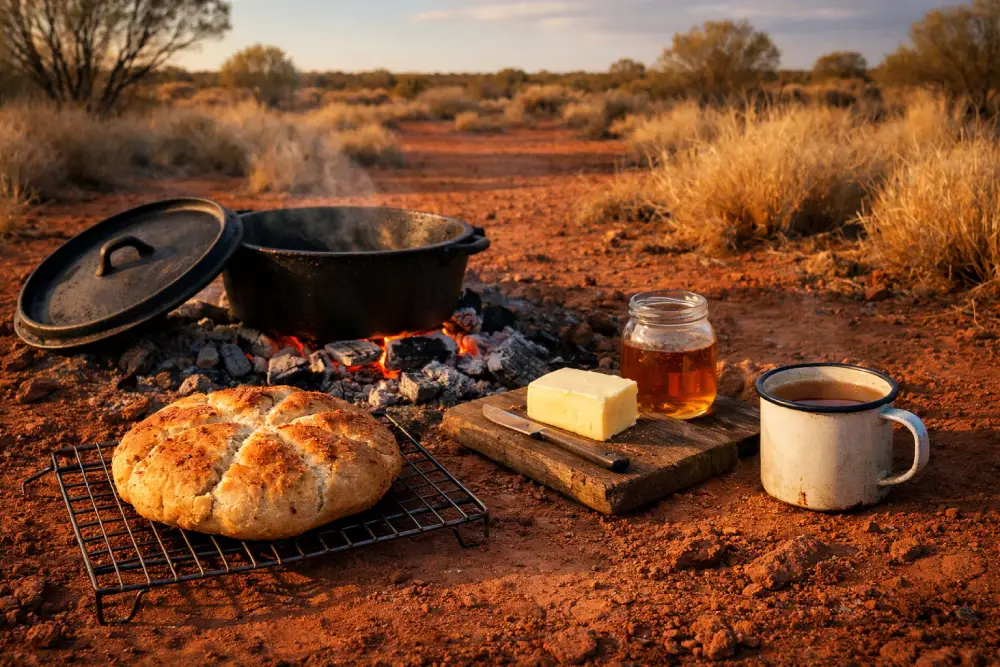
The Australian damper recipe is one of the most practically useful and culturally meaningful things a backpacker on a working holiday can learn to make. Imagine settling by a crackling campfire as the sun paints the outback sky orange and pink — and producing a hearty, crusty loaf from nothing more than flour, salt, and water. That is damper: the iconic Australian bush bread that has fed stockmen, drovers, and travelers for over two centuries. For working holiday makers completing 88 days of regional farm work, it is also one of the most cost-effective ways to fuel your body when you are far from supermarkets and expensive takeaway is eating into your hard-earned piece-rate wages. This guide covers the history, the classic recipe, regional variations, outback cooking safety, and how to make genuinely great food around a campfire on a backpacker budget.
A Journey Through Time: The History of Australian Damper
To understand damper, you need to understand the harsh realities of the Australian bush. The history of this bread is as rugged as the landscapes that shaped it. Its roots trace back to the early 1800s when explorers and settlers had to survive on basic rations across vast, unforgiving terrain. Originally made by stockmen and drovers traveling remote areas for months at a time, damper provided an easy-to-prepare staple that required only non-perishable ingredients — flour being durable, lightweight, and simple to transport became the foundation of the recipe.
What began as pure necessity evolved into one of Australia’s most recognisable cultural touchstones. Today, making damper connects modern backpackers and travelers to the same pioneering spirit that shaped the country. When you are sweating through the humidity of banana picking in Tully, Queensland, or racing piece rates in the frost-covered citrus orchards of Mildura before dawn, you quickly understand why cheap, hearty, self-sufficient food became a survival strategy — and why the damper recipe remains essential knowledge for backpackers in Australia today.

The Classic 3-Ingredient Australian Damper Recipe
The beauty of traditional Australian damper for backpackers is its radical simplicity. You need almost nothing to make it — which is exactly the point when you are living out of a 60-litre pack between regional farm placements.
Ingredients
- 3 cups self-raising flour (plus extra for dusting)
- 1 teaspoon salt
- Approximately 1 cup water (add gradually)
- Optional: 30g butter rubbed into the flour for a richer texture, or substitute up to half the water with milk for a softer crumb.
Method
- Mix your dough — combine the flour and salt in a large bowl or directly in a clean camp pot. If using butter, rub it into the flour until the mixture resembles coarse breadcrumbs. Add water gradually, mixing as you go, until a soft dough forms. Do not overwork it — a rough dough is fine.
- Knead briefly — turn the dough onto a lightly floured surface and knead for about 30 seconds until smooth. Shape it into a round loaf roughly 15–20cm across.
- Cook over the coals — the traditional method is to wrap the loaf in aluminium foil and place it directly in the coals of a campfire, turning occasionally. It takes approximately 30 to 40 minutes. You’ll know it’s done when the base sounds hollow when tapped. Alternatively, place the unwrapped loaf directly in a well-greased cast-iron camp oven and sit it over the coals with more coals loaded on top.
- Hostel oven alternative — if a total fire ban is in place or you are at a working hostel, bake at 200°C (fan-forced) for 25 to 30 minutes until golden and hollow-sounding.
- Serve warm — damper is at its best straight from the fire. Serve with butter, golden syrup, jam, honey, or native bush tomato chutney if you can find it at a regional market.
For durable cast-iron cookware, reliable camp knives, and mixing equipment built to survive the Australian outback, visit the Backpack Australia Resources Page for curated camping and cooking gear recommendations.

Regional Variations: Putting a Local Twist on the Classic Australian Damper Recipe
As you follow the harvest calendar across Australia’s regions, local ingredients offer genuinely interesting variations on the classic damper recipe that reflect the diversity of Australian food culture.
The Coastal Variation
In coastal areas — particularly across the Queensland and NSW coast — damper variations incorporate dried fish flakes or shredded smoked seafood into the dough, producing a savoury loaf that pairs well with fresh catch on a beach campfire. Some coastal versions also add a handful of finely chopped dried seaweed for an umami depth that surprises first-timers.
The Tropical North Variation
In the tropical north — Far North Queensland, the NT, and the Kimberley — coconut milk replaces part of the water for a softer, slightly sweet crumb. Macadamia nuts or crushed native seeds folded through the dough before cooking add texture and a distinctly regional flavour. Our team at Backpack Australia shares this kind of practical regional knowledge when helping travelers prepare for farm work, because eating well and cheaply across different regions is a skill that makes the working holiday significantly more enjoyable.
Outback Cooking Safety: What Every Backpacker Needs to Know
The outback is unforgiving, and campfire cooking requires you to respect the environment and follow local regulations without exception.

Fire Safety and Total Fire Bans
Always verify whether campfires are permitted in your specific area before you attempt to cook using coals. Total fire bans are strictly and seriously enforced across all Australian states during high-risk periods — breaking one carries massive fines and can result in criminal charges if damage occurs. Check the relevant state fire authority app (CFA in Victoria, RFS in NSW, QFES in Queensland) for real-time ban status before you set up camp.
According to the Australian Department of Agriculture’s rural safety resources, fire safety in regional areas requires active awareness of local conditions, not just a quick check on arrival.
Water Planning
You cannot make damper — or survive — without reliable water access. Plan your water sources before you head into remote areas, carry significantly more than you think you will need, and never rely on a single source. Dehydration in the Australian outback is a medical emergency that arrives faster than most travelers from temperate climates expect.
Wildlife and Food Security
Secure all food properly in sealed containers or hung from a tree before sleeping. Dingoes in northern regions, possums, and a range of other native animals will opportunistically take unprotected food — including your flour supply. This is not a minor inconvenience when you are a day’s drive from the nearest town.
Frequently Asked Questions: Australian Damper for Backpackers
Do I absolutely need a campfire to make damper?
No. While burying the loaf in campfire ashes is the traditional method and produces a distinctive crust, damper bakes perfectly well in a conventional hostel kitchen oven at 200°C for 25 to 30 minutes, or in a sealed cast-iron camp oven on a gas burner. If a total fire ban is in place, the oven or gas method is your standard alternative.
Why is my damper dough too sticky?
Add water gradually rather than all at once — the exact amount varies with flour brand, humidity, and altitude. If the dough is too sticky to work with, dust your hands and the surface with extra flour and knead briefly. The dough should hold its shape without sticking to your hands, but does not need to be perfectly smooth.
How do I know when damper is cooked?
Tap the base of the loaf firmly. If it sounds hollow, it is done. If it sounds dense and dull, give it another five to ten minutes and test again. The outside should be golden and firm; the inside should be cooked through but soft rather than gluey.

Secure Your 88 Days and Eat Well on the Road
Mastering the Australian damper recipe as a backpacker saves you real money between farm placements — but nothing drains your working holiday budget faster than weeks of sitting unemployed in an expensive city hostel waiting for regional work to materialise. Every week without income is potential wages permanently lost.
Backpack Australia has direct contact with over 4,000 eligible employers and connects with virtually all the legitimate working hostels across Australia. We help you knock out your 88 days fast, start earning immediately, and get back to the kind of evenings where you are cooking damper around a campfire in the outback because you earned the right to be there.
Sign Up for the Job Help Programme Newsletter to get immediate access to our exclusive employer and hostel networks today.
Conclusion
The Australian damper recipe is more than a simple campfire bread — it is a storied connection to the pioneers, stockmen, and travelers who shaped the country you are working and exploring. By mastering this recipe, learning to cook well and cheaply in regional environments, respecting the serious fire and wildlife regulations of the outback, and securing your 88-day regional work through trusted networks, you guarantee that your time in Australia is both genuinely authentic and properly funded. Grab some self-raising flour, build a fire where permitted, and get to work.